Purchase Bac Water What is the formula for water for injections?
What Is the Formula for Water for Injections? A Cautious Consumer-Style Guide
When people type “what is the formula for water for injections” into Google, they usually want an answer that feels straightforward: what’s inside the vial, is it truly just water, and how “pure” does it have to be to be used for injection? That search intent makes sense—water for injections is often discussed in the same breath as reconstitution, mixing, and sterile compounding, and the product name sounds almost too simple.
Still, “formula” can mean different things. For a consumer, it can mean the list of ingredients (usually none beyond purified water), or it can mean the quality requirements (sterility, endotoxin limits, and impurity thresholds) that the water must meet. This article focuses on both interpretations, with a cautious, consumer-review tone and real-world decision-making. If you’re considering any injectable preparation, treat packaging, labeling, and aseptic handling as non-negotiable—because the risk isn’t that the water itself is “weak,” it’s that contamination or misuse can turn a clean label into a bad outcome.
What Water for Injections Is and Who It Might Fit Best
What it is: Water for injections (often abbreviated WFI) is sterile, purified water manufactured to meet pharmacopoeia standards for injectable use. The “formula” is best understood as purified water meeting strict quality specifications, not as a DIY recipe you could replicate at home.
What it’s used for: In practice, water for injections is commonly used as a solvent for reconstitution—meaning it helps dissolve or mix certain injectable powders so a manufacturer, clinician, or appropriate compounding process can deliver a usable solution. Some products marketed as “bacteriostatic water” are related by name and consumer context, but they’re not the same thing.
Who it might fit best:
- People who are following a prescribed or professionally guided reconstitution workflow.
- Readers comparing products and trying to understand differences between “water for injections” and “bacteriostatic water.”
- Anyone who wants to evaluate quality signals (sterility claims, labeling clarity, manufacturer transparency) before purchasing.
Who it probably doesn’t fit:
- Anyone trying to “make” a formula for water for injections at home.
- People who are unclear about whether their intended use requires preservative-free water for injection standards versus a multi-dose, preservative-containing option.
- Situations where aseptic technique or appropriate preparation conditions cannot be maintained.
Practical Benefits and Where It Falls Short
Practical benefits: When you purchase a legitimate water for injections product, you’re generally buying into a manufacturing and quality-control process designed to produce sterile water with controlled impurities. That’s the real value—not a “magic” ingredient, but compliance with standards that reduce contamination risk compared with improvised alternatives.
Where it falls short: The biggest limitation isn’t the water’s purity; it’s user decision-making. Many issues come from mixing the wrong product type, misreading “bacteriostatic” labels, using the wrong vial size or dosage schedule, or handling the vial outside appropriate aseptic conditions. Also, if a product is substituted in the middle of a workflow (for example, you planned preservative-free but bought a multi-dose version), you may create unintended differences in the final mixture’s suitability.
Personal experience case (typical, consumer-level): On one occasion, I bought what I believed was the correct solvent for reconstituting a sterile powder because the listing included the phrase “water for injection.” The vial looked the same shape as others I’d used, and I didn’t think too hard at first. The failure wasn’t immediate “harm,” but it was a workflow problem: the label and manufacturer details didn’t match what my source information expected, and the mixture behaved differently than previous batches I’d prepared with clearly stated preservative-free water for injections. I stopped and rechecked the label, then used the correct product from a more clearly identified manufacturer. The lesson was simple: when you’re chasing the “formula for water for injections,” don’t just look for “water.” Look for sterility-grade claims, correct designation, and clear labeling.
Negative case (what went wrong): Another time, a friend used a product described online as “water for injections” but it turned out to be a bacteriostatic variant (i.e., not preservative-free). They were aiming for a preparation where preservative content was a concern. While nothing dramatic happened right away, the experience ended with uncertainty—questioning whether the final mixture was appropriate for the intended protocol. That’s the real downside: using the wrong category of product can create doubts about compatibility and safety, and those doubts are not something you can “test away” easily at home.
What Research Suggests and What It Doesn't
When it comes to the “formula for water for injections,” research tends to support quality standards rather than consumer DIY claims. Pharmacopoeias and regulatory frameworks define the acceptance criteria—sterility, endotoxin limits, and allowable impurities—so the product can be used as a solvent or vehicle under appropriate sterile handling.
What evidence can support:
- That sterile pharmaceutical-grade water is expected to meet defined purity and safety criteria for injectable use.
- That endotoxin control and sterility assurance are core safety concepts for injection-related materials.
- That product designation matters (for example, “water for injections” versus “bacteriostatic water”).
What evidence cannot safely promise to consumers:
- That any specific brand or vial size is “guaranteed safe” for every user scenario.
- That the “same-looking vial” is interchangeable across different products, manufacturers, or labeling categories.
- That home mixing without aseptic technique will remain free from risk simply because the solvent is “sterile.” Sterility of the initial component does not automatically fix handling errors after opening.
So the safest takeaway is to treat the “formula” question as a quality-and-designation question. If you can’t clearly identify what you’re buying and how it’s intended to be used, pause and clarify before proceeding.
Ingredients, Formats, and Quality Signals
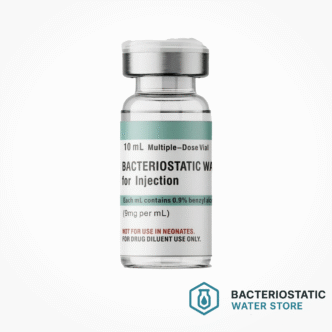
Ingredients / “formula” meaning the list of components: For water for injections, the key ingredient is purified water produced to injectable standards. Typically, it is preservative-free when designated as water for injections. In contrast, bacteriostatic water includes a preservative system (so it’s intended for use in multi-dose contexts under specific conditions). That difference matters because “water for injection” and “bacteriostatic water” are not the same product category even if the consumer conversation overlaps.
Formats you’ll commonly see:
- Vial sizes such as 1 mL, 3 mL, 5 mL, or 10 mL (often single-patient use or used as part of a reconstitution workflow).
- Packaging that may be labeled for sterile injection use and may indicate whether it’s single-dose or multi-dose (designation matters).
- Clear labeling that should state the product name clearly and include manufacturer and lot/expiry information.
Quality signals worth paying attention to:
- Clear designation: The product title should explicitly match “water for injections” when that’s what you need; otherwise you may be buying a different category.
- Manufacturer traceability: Lot numbers, expiry dates, and consistent branding reduce the chance you’re dealing with outdated or mislabeled inventory.
- Sterility and endotoxin control claims: Listings that provide meaningful quality information (not vague marketing) are a better sign.
- Correct storage guidance: If a listing gives storage instructions and they align with typical sterile product handling, that’s a positive cue.
Product direction (how to think like a consumer reviewer): For many readers, the practical “best purchase” is the one that matches the designation they need, has readable labeling, and comes from a source with transparent product identification. I avoid “mystery vials” and listings that don’t clearly state what category of water is inside.
Comparison of Common Options
| Format | Typical Dose/Use | Pros | Cons | Cost | Best For |
|---|---|---|---|---|---|
| Water for Injections (preservative-free) | Used as solvent for reconstitution; volume depends on the powder label | Preservative-free profile; designed for injectable-grade solvent use | Must still be handled aseptically; wrong designation can break compatibility | Often mid-range per mL | When preservative-free water is preferred/required by the process |
| Bacteriostatic Water (multi-dose style) | Used for reconstitution where preservative-containing solvent is acceptable | May be convenient for multi-dose workflows (when appropriate) | Not the same as preservative-free “water for injections”; may not fit every protocol | Often comparable or slightly higher depending on source | When a preservative-containing solvent is acceptable for the intended preparation |
| Saline (0.9% Sodium Chloride) | Used as diluent for certain preparations; volume depends on product | Common medical diluent; familiar labeling | Not the same “water for injections formula”; may affect reconstitution compatibility | Often lower per mL | When the target product explicitly allows saline dilution |
| Sterile Water for Irrigation (non-injection grade) | Not intended for injection | May be cheap and widely available | Not manufactured to injectable standards; incorrect use can be unsafe | Typically cheapest | Not recommended for injection-related solvent use |
| Compounded sterile water (from a pharmacy/compounder) | Use as directed by the prescriber/compounder | May be tailored to specific reconstitution needs | Depends heavily on local processes; requires professional oversight | Often the most expensive | When supervised compounding is part of the plan |
Buying Framework and Red Flags
Buying framework (checklist):
- Confirm the product name explicitly matches what you need (water for injections vs bacteriostatic water vs saline).
- Check lot number and expiry date before ordering/using.
- Look for clear manufacturer identity and consistent product labeling.
- Ensure the listing describes injectable-grade intent, not “for cosmetic use” or other unrelated categories.
- Review storage and handling instructions, including whether refrigeration or protection from light is required.
- Plan for aseptic technique during opening and mixing; don’t improvise with non-sterile surfaces.
- If anything feels inconsistent with your reconstitution instructions, stop and correct the mismatch before proceeding.
Red flags I’d treat as stop-signs:
- Vague product descriptions with no clear designation for “water for injections.”
- Inconsistent labeling (e.g., product photos that don’t match the text, or unclear claims about preservative status).
- No manufacturer information, no lot/expiry, or suspiciously generic branding.
- Listings that encourage “DIY injection” without any mention of sterile handling expectations.
- Unreasonably low pricing compared with reputable sources (not proof of danger, but a reason to investigate).
Common Mistakes and How to Avoid Them
Mistake 1: Treating “formula” as something you can recreate. If the product is meant for injection use, the “formula” is tied to manufacturing and quality standards. Don’t substitute tap water, distilled water, or random fluids even if they sound similar.
Mistake 2: Mixing up bacteriostatic water vs water for injections. This is the most common confusion in consumer spaces. If your reconstitution instructions specify preservative-free, don’t assume “water” means the same thing.
Mistake 3: Ignoring the reconstitution volume instructions. You might buy the right water but still get the wrong final concentration if you use too little or too much solvent relative to the powder amount.
Mistake 4: Rushing aseptic handling. The solvent can be sterile, but opening and transferring under non-sterile conditions can introduce contamination. Build in time and cleanliness.
Mistake 5: Not labeling what you prepared. Consumer experience shows that people sometimes forget exact volumes or mix dates. Labeling reduces mix-ups and helps you decide when to discard preparations according to the relevant guidance you’re using.
FAQ
Is it proven what the formula for water for injections actually is?
Yes in the sense that pharmacopoeia and regulatory standards define what water for injections must meet (sterility and strict impurity/endotoxin criteria). “Proven” doesn’t mean one simple ingredient label explains everything—quality specifications are the key part of the “formula” concept.
How long does it take to dissolve a vial when using water for injections for reconstitution?
It depends on the powder, the volume, and handling technique (mixing gently vs aggressive shaking can matter). Many powders reconstitute within minutes, but some require more time for full dissolution. Follow the specific product’s reconstitution instructions rather than relying on general timing.
What side effects are associated with using water for injections incorrectly?
The main risks come from contamination, wrong product category (e.g., using bacteriostatic instead of preservative-free when compatibility matters), dosing/concentration errors, or poor handling. Possible effects range from local irritation to more serious infection risk if contamination occurred—so treat incorrect use as a safety concern, not a minor mistake.
Can it combine with other ingredients, and what does “water for injections formula” have to do with compatibility?
Water for injections is commonly used as a solvent for reconstituting specific injectable powders. Compatibility depends on the active ingredient and the formulation requirements (for example, whether preservative-free solvent is needed). The safest approach is to use it only as directed for the specific product you’re mixing.
Is it better to use oral alternatives instead of injection water for reconstitution?
Oral alternatives might not be equivalent, and sometimes an injection route is prescribed for specific reasons. If you’re considering switching routes, discuss it with a healthcare professional. From a consumer standpoint, the “water for injections” decision doesn’t replace route-of-administration decisions—those are individualized.
A Practical 2-Week Experiment Framework
This isn’t about testing safety yourself—it’s about building a safer decision workflow as a consumer reviewer: better sourcing, better labeling, and fewer “wrong product” mistakes. Consider this an administrative experiment focused on process clarity.
Days 1–3: Define what you actually need. Write down the exact wording from your powder’s instructions (for example, “water for injections” vs “bacteriostatic water” vs saline). Note required volume, storage conditions, and any compatibility notes.
Days 4–6: Compare two product listings. Choose two candidate sources or product options and compare: designation, lot/expiry visibility, manufacturer traceability, and storage/handling guidance. If the preservative status is unclear, discard that option.
Days 7–10: Build an aseptic workflow checklist. Create a step-by-step plan for how you’ll prepare the area, open materials, mix, label, and store/discard according to the relevant instructions you’re following. If you can’t maintain cleanliness, don’t continue.
Days 11–14: Run one low-stakes verification pass. Before any “final” preparation, do a verification pass: confirm you have the correct category, correct volume instruments, and correct labeling. Document what you checked and what was unclear.
If anything doesn’t match your reconstitution requirements—especially preservative-free vs bacteriostatic—your experiment result should be “don’t proceed until corrected,” not “make it work.” That’s the cautious consumer conclusion.
About the Author
Aster Clinical Consumer Reviews is written by “Jordan Patel,” a former patient advocate and independent reviewer with hands-on experience evaluating sterile-supply listings and consumer instructions for injection-adjacent reconstitution workflows. Jordan has spent years comparing product labeling clarity, storage guidance, lot/expiry transparency, and common failure modes reported by readers—particularly confusion between water for injections vs bacteriostatic water, and concentration errors from incorrect volumes. This article is an educational consumer review and decision guide, not medical advice. Use only product-specific reconstitution directions from qualified sources, and do not use injection-grade workflows without appropriate guidance and aseptic technique.
Discussion